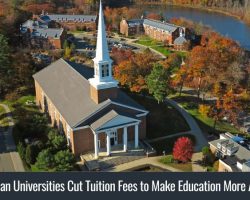
Gordon College in Wennami, MA, declared a 33% cut in tuition fees, following two other members of the Council of Christian Colleges and Universities who have also changed tuition fees recently to make private Christian education more affordable. We write about this with reference to Christian News Headlines. This sharp decline was implemented partially by a charity event that helped to collect more than $70 million. It also stems from … Continue reading →
Thank you for checking out our resources page! Below are some resources by Criswell professors, or recommended by Criswell professors, that we believe will benefit you in your life and ministry. Please check back again as we are continually updating the site with more helpful information.
Thank you for checking out our debates page (or as we like to call them, Dinner & Dialogues)! Criswell College is devoted to engaging theological and Biblical issues with other Christians in a spirit of respect and unity. We hope you benefit from these discussions as much as we have.
Future Kingdom: Perspectives on the Millennial Reign of Christ Listen to the lectures and Q and A from the Future Kingdom Conference sessions below. You can also check out Brandon Smiths live-blog of the event here. Don Preston, Preterism http://www.criswell.edu/audio/1-Don_Preston-_Preterist_audio.mp3 Wayne House, Traditional Dispensationalism http://www.criswell.edu/audio/2-Wayne_House_-_Traditional_Dispensationalist_audio.mp3 Kenneth Gentry, Postmillennialism http://www.criswell.edu/audio/3-Kenneth_Gentry_-_Postmillennialist_audio.mp3 Craig Blaising, Progressive Dispensationalism http://www.criswell.edu/audio/4-Craig_Blaising_-_Progressive_Dispensationalist_audio.mp3 G. K. Beale, Amillennialism http://www.criswell.edu/audio/5-Gregory_Beale_-_Amillennialist_audio.mp3 Craig Blomberg, Historical Premillennialism http://www.criswell.edu/audio/6-Craig_Blomberg_-_Historical_Premillennialist_audio.mp3 Q and A Panel Discussion http://www.criswell.edu/audio/7-Millennial_Conference_Q_and_A_audio.mp3 … Continue reading →
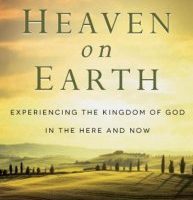
Books authored by or contributed to by Criswell professors: Heaven On Earth: Experiencing the Kingdom of God In the Here and Now Heaven On Earth: Experiencing the Kingdom of God In the Here and Now is popularly written and aimed at an audience of informed laypeople, theological students, and pastors. In it, I present the Kingdom of God as the grand narrative of the Bible (from Genesis 1 to Revelation … Continue reading →
Everett Berry Dr. Berry, Professor of Theology, has been on faculty at Criswell College since 2004.He completedhis Ph.D. in Systematic Theology from Southern Seminary and pastored a church in Kentucky for five years.Heand his wife Tabitha havetwo children, Elaina and Brian. Dr. Berrys areas of interest include Patristics, theological method, Christology, and Eschatology. Follow him on Twitter: @berry_everett. Barry Creamer Dr. Creamer is President and Professor of Humanities at Criswell … Continue reading →
These friends of Criswell College have been kind enough to contribute to this blog: -David Henderson, MD Board-certified psychiatrist Department Chair of Counseling and Psychology at Criswell College Blogger atPurpose Beyond Pain -Bruce Ashford Provost and Dean of the Faculty at Southeastern Baptist Seminary Fellow for the Bush Center for Faith and Culture Blogger at Between the Times -Owen Strachan Assistant Professorof Christian Theology and Church History at Boyce College … Continue reading →
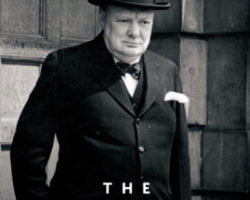
Winston Churchill: Some Agnostic, Some Atheist (Part 1) *Posted by Dr. Jerry A. Johnson *This post is the first part of an extended commentary on Winston Spencer Churchill: Defender of the Realm, 1940-1965 , the last volume in the epic series The Last Lion by William Manchester and Paul Reid. You can read the second and third posts here and here. Was Winston Churchill a humanist with a godless ethic, … Continue reading →
by Barry Creamer If this issue is so obvious, why were the justices split 5-4, and why are so many people so obviously wrong to everyone who disagrees with them? The answer is simple. The disagreement is rooted in competing worldviews. Christianity is not bound by a worldview, but people, including Christians, are. And worldviews are neither chosen by their adherents nor necessarily consistent, even within an individual. As I … Continue reading →